
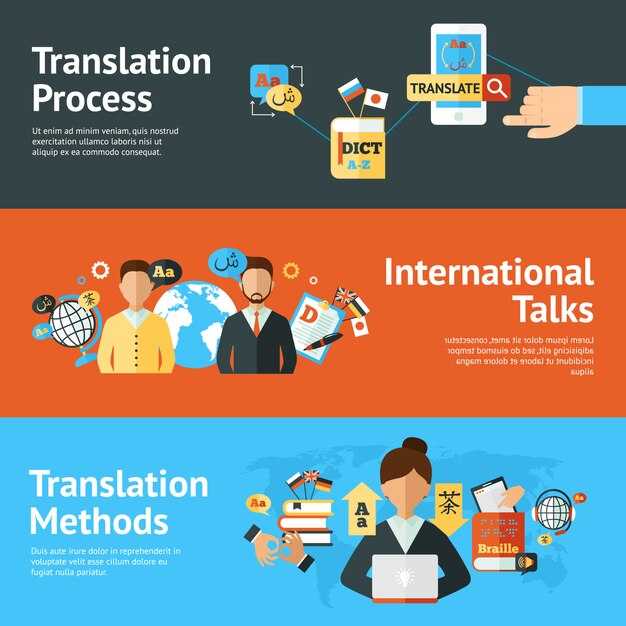
Start with a needs assessment and choose a partner that can integrate with your CMS and CAT tools, manage terminology, and offer clear service levels. Define your communications goals, the settings for localization across markets, and target turnaround times. For large volumes, prioritize vendors with scalable teams and proven project management to meet tight deadlines.
The significance of reliable translation appears in brand-consistent papers, accurate product sheets, and risk-managed communications across markets. A strong partner preserves your reputation, adheres to style guides, and documents glossaries to protect your reputation as you scale.
Expect a structured workflow: intake of tasks, glossary building, translation, review, and final QA. A good agency uses collaborative terminology databases, assigns linguists with industry experience, and delivers consistent turnaround for urgent items while maintaining quality. Request a pilot for high-impact documents to validate results before broader rollout.
Track ROI with concrete metrics: turnaround times by document type, error rates, glossary adherence, and stakeholder satisfaction. Considerations include data security, confidentiality, and regulatory compliance. For growth, plan to scale by region, align with sales and marketing strategies, and invest in a scalable terminology memory to accelerate future projects and reduce repetitive tasks.
In the next 30 days, youve to map sources, build an initial glossary, pilot translations for two core document types, and set up a review workflow in your settings. Verify vendor capabilities for large-volume work, agree on turnaround expectations and reporting, and establish a simple scorecard to compare options. Use those results to select a partner who can support your ongoing scaling in multiple markets.
Transparent pricing structure for enterprise translation projects
Define a tiered pricing model with clear per-word rates and fixed fees for setup, QA, and ongoing maintenance. This structure bundles translations, editing, and localization into a single, predictable bill, supporting globalization goals and the significance of revenue planning for large organizations, helping with meeting deadlines.
Includes three blocks: base translations, language edits, and localization adjustments (brand alignment, terminology, and styles). This pricing includes the reuse of existing translations where possible to lower costs, like leveraging memory. Use a time-sensitive surcharge for urgent requests, and a setup fee to cover glossary creation, translation memory integration, and system interfaces.
Rates vary by language pair, content type, and complexity. where applicable, reuse existing translations from memory to reduce costs; aside from base translations, add QA and editorial steps to ensure accuracy across locales. Moreover, provide visibility into where money goes, and how qualified linguists contribute to brand consistency that supports revenue and faster time-to-value for teams.
Typical ranges for enterprise work: translations 0.12–0.25 per word; editing 0.04–0.09; QA 0.02–0.05; layout/DTP 0.08–0.15 per page. Setup 1,000–3,000 USD, depending on glossary scope and system integrations. Ongoing maintenance 0–2% of annual word volume for memory management. Time-sensitive orders incur 15–50% increases; scaling programs reaching 1–2 million words annually unlock deeper discounts. This structure makes cost transparent and enables making decisions quickly to meet needs without costly overruns.
To align with systems, provide a live quote with a line-item workbook and a fixed-price pilot on a representative scope. The pilot validates estimates quickly, establishes a baseline, and supports scaling across languages and local markets. This approach also helps others in the organization see the value, like brand teams and content creators, while maintaining a consistent translation style across all channels.
Key pricing components: word count, language pair, specialty, and file format
Choose a pricing model that ties directly to word count, language pair, specialty, and file format. This four-factor framework helps professionals and their teams solve various problems and makes the value easy to compare. It also reduces gaps between expectations and invoices and provides a clear basis for negotiations with providers.
Word count pricing sets a base of per-word rates that reflect content type. For general material in common pairs (EN–ES), expect $0.08-$0.15 per word; for technical material, $0.12-$0.25 per word; for legal or regulatory content, $0.20-$0.40 per word. For small projects, request a volume discount; most providers extend 5–15% off at defined thresholds. This approach is useful for evaluating the most significant cost drivers and planning budgets without surprises.
Language pair influences pricing: widely used pairs (EN–ES, EN–FR, EN–DE) usually stay in the lower range, while exotic pairs (EN–JA, EN–AR) add 15–40% more than the baseline, depending on availability of qualified professionals and turnaround goals. If you have to work during tight timelines, plan for a higher rate; this helps avoid delays and reduces risk of quality gaps.
Specialty adds a premium for fields requiring qualified professionals and terminology management. Legal, medical, financial, and software localization often add 0.04–0.15 per word or 10–25% of the base rate, depending on glossary complexity and review rounds. Original content with glossaries can reduce revisions and be more beneficial for marketing assets and long-term campaigns, while focused terminology work helps enhance accuracy across their layouts.
File format and layout: converting from PDFs, scanned documents, or fixed-layout formats adds steps. OCR conversion can add 0.03–0.12 per word; preserving layout or XML tagging can push the price up by 5–15% and requires back-and-forth during QA. If you deliver in editable formats like Word or Excel, the cost tends to be lower than fixed layouts, but layout fidelity still can influence final pricing. Clear guidelines from the client reduce back-and-forth and keep the project on track.
How to choose a provider: look for a partner that offers a transparent quote built on the four components. Ask for a sample that demonstrates their layout process, glossary management, and conversion workflow across your file types. This helps ensure you get reliable results for their marketing assets and other original content, and it backs your budget with measurable metrics. Most clients report that a clear framework reduces gaps and boosts confidence among people across teams.
Pricing models in B2B: per-word, flat-rate, and project-based options explained
Start with per-word pricing for projects with defined word counts and strong QA, especially in health or regulated sectors where accuracy matters.
Per-word pricing details: The cost scales with document length; typical ranges for B2B translation are $0.12–$0.25 per word for standard content, higher for legal, medical, or german-language documents. Glossaries and translation memories help maintain consistent terminology across styles, reducing drift between languages and ensuring that subject matter like regulations and compliance stays aligned. This model rewards precision and gives clear visibility into workload, but volume increases can stretch the bill if content expands or revisions introduce new terms.
Flat-rate pricing works well for fixed deliverables such as a standard 20-page brochure in a single layout and a single language pair. It reduces admin overhead and gives procurement teams a predictable cost, often with a built-in change clause. Be sure to define the scope tightly: number of pages, word count range, layout constraints, and acceptable revisions. If content grows or new sections appear, apply a change-order policy to avoid disputes.
Project-based pricing fits multi-language programs, ongoing updates, and materials that require converting existing content across styles. It supports a professional approach to governance, with milestones, acceptance criteria, and linked payments. This option helps when the scope varies across languages or when you need to align with broader business goals, but it requires careful documentation and a clear change-management path.
How to choose: start with a quick discovery of demand, including health and regulatory needs, and select the model that aligns with the risk you can bear. For new vendors, test with a pilot project to compare cost and quality. Track metrics such as on-time delivery, glossary consistency, and post-delivery defect rate; this data helps you compare options on a like-for-like basis and discover the best fit for both speed and quality. Use german-language tests and broader language pairs to verify process stability and ensure regulations are respected.
What adds to the bill: rush fees, extra revisions, DTP, and localization requirements
Cap rush fees, cap revisions, and define DTP and localization scope to keep the bill precise and predictable. Use fixed turnaround quotes, limit revision rounds to two, and tie DTP and localization to clearly defined milestones. This concrete approach helps you compare proposals across vendors with confidence.
Overview: cost drivers include rush fees, extra revisions, desktop publishing (DTP), and localization requirements. For german projects and large websites, accuracy matters, so secure budgeting for terminology management, QA, and layout checks. Rely on official microsoft documentation and industry guidelines to set expectations, and document the rationale in a shared overview there. A deep, data-driven strategy clarifies context, avoids ambiguous terms, and ensures the translator can serve complex, industry-specific content with clarity and speed.
| Item | What adds to the bill | Typical range | Mitigation tips |
|---|---|---|---|
| Rush fees | Expedited delivery increases reviewer workload, overtime QA, and priority project management. | 25-40% for 24h; 15-25% for 48h | Ask for a fixed window quote; set SLA dates; bundle rush with other services when possible |
| Extra revisions | Rounds beyond included feedback and QA, often driven by ambiguous or changing feedback. | 5-15% of base cost per extra revision; cap at 2-3 rounds | Define acceptance criteria up front; limit to 1-2 additional revisions; specify sign-off process |
| DTP (desktop publishing) | Layout, typography, and formatting adjustments after translation, impacting file preparation | $20-$60 per page or 5-15% of base translation cost | Pre-approve templates, fonts, and styles; keep final deliverables to agreed formats; use a single layout template |
| Localization requirements | Market-specific adaptation, date/number formats, images, and regulatory notes | 10-40% surcharge on base translation depending on markets and content complexity | Limit target markets; reuse translations with memory tools; align with regulations and provide glossaries |
How to read a quote: line-item breakdown, unit rates, and unit of measure
Begin with the line-item breakdown: verify each entry mirrors the work described in your specifications and the brochures you reviewed, and confirm the same tasks appear under the same project settings. Check that item names and descriptions are precise, that quantities reflect your file volume, and that currency and due dates line up across items. Flag any high-stakes items that carry extra QA or multilingual reviews and note those costs separately for traceability. Ensure the totals are accurate to prevent costly rework.
Then review unit rates: determine whether the quote uses per-word, per-page, or hourly units, and ensure the unit of measure is applied consistently across all line items. Compare rates for the same language pair and service level, and request the model or method used by the vendor (for example, wordsit) to justify costs. If items use multiple units, ask for a conversion to a single basis, and check any rush options that add a premium. Coordinate with lara to confirm settings on fast-turnaround items, and verify whether passport-style approvals or client verification steps are included in the fee or billed separately. Maintain efforts to keep the assessment focused and clear.
In unit of measure, require clear definitions: specify whether counts reflect source words, target words, pages, or characters, and whether OCR, DTP, or QA counts are included. The quote should state one standard unit across all line items, enabling apples-to-apples comparison. If you see a different measure, request a conversion or a clearly stated denominator; this avoids misalignment that can derail high-stakes projects and reduce appeal with stakeholders.
Finally, assess the overall cost structure against opportunities and demand for the project. Look for combinations that align with your required solution and the long-term relationship: a comprehensive scope that covers terminology management, glossaries, and localization models. Request a sample to confirm accurate and consistent results, verify delivery milestones, and ensure the quote supports projects requiring strict compliance with specifications. Use the quotes to identify appropriate options and to plan next steps with the vendor.
Establishing price expectations: SLAs, quality checks, and support impact on cost
Define price bands tied to SLAs and QA scope; implement three tiers–Standard, Pro, and Enterprise–with explicit turn-around times, native-review requirements, and a defined support footprint that maps to a transparent cost structure.
Document pricing logic and the factors that drive cost, including word volume, language pairs, domain sensitivity, and the level of checks required. In programs reaching several million words annually, scale triggers should align with filings and contractor assignments across the agency network.
-
Identify price drivers: word count, language pair, domain complexity, source quality, and native-review needs; map staffing and tool costs. Track sensitivity for high-risk content to avoid surprises in the final bill.
-
Define SLAs and targets for each tier: Standard, Pro, and Enterprise. Examples: Standard delivers within 2 days per 1,000 words; Pro targets 24 hours for typical blocks; Enterprise offers 4-hour turnarounds for urgent requests. Tie targets to pricing and establish clear escalation paths.
-
Bundle quality checks into pricing: automated typos detection, glossary alignment, and native proofreading. Depth of QA should scale with tier. Use version control to track each deliverable and ensure traceability of changes.
-
Assess risk and gaps: compare customer expectations to deliverables; list gaps; outline steps to overcome them with process tweaks and staff training.
-
Align contracts and filings: update contracts to reflect tiers, SLAs, and pricing; maintain versioned documents; coordinate with the agency and client to keep filings and compliance records aligned.
-
Implement adaptation plan: roll out in phases, starting with a pilot language pair; collect feedback, then scale; automate checks where feasible and monitor data-protection practices and access controls; refine processes as volume grows.
-
Monitor metrics and adjust: track cost per word, on-time delivery rate, QA pass rate, and escalation frequency; trigger pricing updates when monthly volumes exceed defined thresholds (for example, toward several million words); communicate changes ahead of renewals.
-
Practical example: Standard tier at 0.12–0.15 USD per word with a 2-day SLA; Pro tier at 0.18–0.22 USD per word with 24-hour SLA and enhanced QA; Enterprise tier at 0.28–0.35 USD per word with 4-hour SLA, native reviewers, and stricter data-protection controls.


