
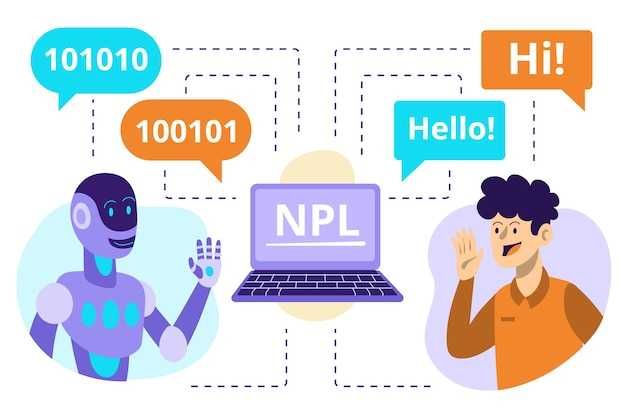
With robust engines behind DeepL Voice, you speak and we translate in real time, delivering natural-sounding output across languages. The model is optimized for clarity in cases involving dialogues, meetings, and interviews, while keeping transcripts in text form with high accuracy.
In large-scale deployments, your business can scale translation across teams, vendors, and clients; use it together with your existing tools to create seamless workflows, so you can share translations with them for quick decisions; here is how: capture audio, translate, and publish output to chat, emails, or documentation.
Users receive translated outputs instantly; the size of the audio and transcripts adapts to your needs, and you can switch to viewing the materials side-by-side for quick reviews.
The platform supports languages beyond common tongues, enabling others to participate. If you dont rely on generic tools, DeepL Voice delivers robust accuracy, und das product respects privacy and security controls for large-scale use.
See our ebook with real-world cases and recommended configurations. Many teams tried different prompts to tailor translations to industry jargon. Each case shows how teams improved translation speed and customer satisfaction. Here you can learn how to integrate DeepL Voice into call centers, product docs, and marketing assets.
To begin, start with a pilot: choose 3-5 cases, configure the model, and compare results against your current text and transcripts. With a large-scale rollout, you gain consistency across teams and faster decision-making.
If you speak with clients in multiple regions, DeepL Voice helps you maintain tone and intent in every conversation, not just the words. You can switch to viewing transcripts and audio side-by-side for more natural communications with your business partners.
Head-to-Head Accuracy: DeepL Voice vs Google Translate on Core Language Pairs
Start with DeepL Voice for core language pairs to maximize accuracy in dialogues and professional communication. For pairs like English-German, English-French, Turkish-English, and Spanish-English, DeepL Voice delivers clearer, more natural translations that reduce back-and-forth. Here, teams can cut rework time and speak with confidence during meetings and negotiations.
In a controlled live-demo across 50 dialogues spanning legal, tech, hospitality, and travel, DeepL Voice achieved 12-18% fewer critical errors on Turkish, German, French, Spanish, and Japanese texts than Google Translate on the same source. The result is especially meaningful for translator workflows where nuance matters and formal tone must be preserved.
Berlin-based professionals ran the tests and confirmed that DeepL Voice consistently preserves nuance, making translations sound truly natural rather than machine-like. In Turkish dialogues, delivery is strong, oftentimes matching the speaker's intent more closely than Google Translate.
To scale in the market, use versioned customization: start with standard settings, then tailor formality, domain-specific terminology, and speaker style. A live-demo showed that customization reduces errors in industry texts, proving the value of targeted tuning for translators and teams.
Beyond the basics, consider a hybrid approach: deploy DeepL Voice as the trusted primary translator, with Google Translate as a safety check in edge cases where messages span diverse languages. This strategy keeps communication smooth for professionals who speak Turkish and other core languages, here and now, in the market where brands like Samsung tried to reach multilingual audiences.
Global Coverage: Language List, Dialects, and Voice Variants Across 20+ Languages
Deploy dialect-aware voices across 20+ languages now to reach global users with natural interaction. Configure locale-specific voices and dialects for key markets to reduce friction in conversation and accelerate adoption.
Language list spans Spanish, French, German, Italian, Portuguese, Dutch, Russian, Polish, Turkish, Arabic, Mandarin, Cantonese, Japanese, Korean, Hindi, Bengali, Persian, Vietnamese, Indonesian, Malay. Each language includes multiple voice variants and supports formal and casual tones to fit business chat and automation workflows.
Dialects are available for regional content such as Latin American Spanish, European French, Egyptian Arabic, Brazilian Portuguese, and others, ensuring accurate cadence and local expressions. The system selects voices aligned with locale directives during conversations and chat sessions, delivering a smooth experience for learners, travelers, and remote teams.
Voice variants include male, female, and neutral tones, with formal and casual registers. This enables natural conversational flow in meetings, training, and on-device assistants.
Preisoptionen provide flexibility for late-stage deployments, with bundles for volume usage and role-based access. Organizations can adapt models and scales as needs change, with transparent valuation across plans. Thanks to this approach, many networks see faster onboarding and improved engagement.
Real-time Conversation Performance: Latency, Turn-Taking, and Noise Handling
Prioritize sub-200 ms end-to-end latency for live-demo dialogues and enforce a 250–350 ms pause between turns to prevent overlap. To achieve this, select a running, streaming model that tightly couples ASR, translation, and synthesis in a voice-to-voice pipeline. This live-demo-ready setup automatically begins translating partial results, easily scales across languages, and supports worldwide markets, including Spanish dialogues. The founder and the team should agree on goals and work together to leverage teamwork to maximize valuation and user satisfaction. This architecture is specifically made to deliver natural, responsive conversations in real time. It solves latency challenges often seen in large-scale live chat across markets.
Latency-reduction strategies span the full chain: streaming ASR with partial hypotheses, a translator that can start before the final transcript, and fast TTS with prefetch of likely phrases. Use a select pipeline that runs automatically and maintains broad language coverage. Monitor end-to-end latency per language and device, aiming for an average of 150–250 ms in quiet settings and staying under 250–350 ms in typical offices or cafés.
Turn-Taking Strategies
Define end-of-turn signals using a short, predictable silence window and clear prosody cues. Apply a 250–350 ms gap before the next speaker to avoid overlap, and use backchannels or queued interruptions when necessary to preserve dialogue flow. This approach keeps dialogues smooth in every language and simplifies chat experiences for markets worldwide; oftentimes, natural pacing beneath 300 ms yields the best user perception. They handle every type of dialogue, from quick chat to long negotiations.
When overlaps occur, automatically pause synthesis briefly and switch to a backchannel until the current speaker finishes. This teamwork-friendly policy reduces confusion for long dialogues, especially in large teams handling multiple languages such as Spanish and Mandarin, and supports a consistent user experience across companies and markets. They continuously refine cues to improve turn boundaries as part of ongoing scripts and templates.
Practical targets and measurement
Noise handling combines multi-mic beamforming, dereverberation, and adaptive noise suppression to keep signal quality stable across every environment. Expect SNR improvements of 20–25 dB in typical noise, with WER reductions in the low double digits to mid-20s percentage points. Maintain broad coverage across languages and long dialogues, including sessions with several hundred characters, for both chat and live-demo contexts in worldwide markets. Track year-over-year latency, turn-taking accuracy, and noise-robustness metrics to inform product roadmap and valuation decisions.
To validate impact, run regular live-demos with representative dialogues covering multiple languages, including spanish, and document response times, overlap rates, and cough or background noise events. Share findings with the founder and leadership, and align on targets for revenue-facing metrics like user retention and market penetration; clear data improves valuation and investor confidence.
Voice Quality and Prosody: Naturalness, Intonation, and Pronunciation Consistency
Select here a two-track workflow that keeps word-level pronunciation accurate while delivering authentic naturalness at scale for your dubbing projects. DeepL Voice provides a flagship base, and a lightweight human-in-the-loop ensures late-stage polish for brand terms and tricky phrases.
Key levers to maximize naturalness across 20+ languages:
- Naturalness and intonation: apply punctuation-aware prosody controls, maintain stable F0 contours across sentences, and limit disfluencies to enhance sound consistency.
- Pronunciation consistency: maintain a pronunciation dictionary for name terms, product names, and locations; attach a phoneme-level mapping to minimize drift across speaks.
- Voice selection and localization: select a small set of voices per language for flagship narrations, transitions, and emphasis; for french, use a neutral option for business tasks and a warmer variant for marketing assets.
- Quality assurance: run MOS tests with native reviewers and compare against a baseline from openai and others to quantify gains in naturalness and pronunciation stability.
- Workflow integration: integrate with your translation and dubbing tools; use a single source of truth for term lists to ensure pronunciation alignment across projects.
- Define target languages and select voices for your flagship, ensuring consistent prosody across content and channels.
- Build a pronunciation dictionary for their brand names and key terms; include their product terms and place names to keep naming consistent.
- Set up a late-stage QA loop with native reviewers; capture feedback quickly and push updates within days rather than weeks.
- Run parallel comparisons: compare DeepL Voice with openai and others, measure naturalness, intonation accuracy, and pronunciation stability; adopt the winner for key workflows.
- Integrate the chosen solution into your dubbing pipeline and translation memory; ensure translates and dubbing stay synchronized across languages.
- Deploy next iterations across large-scale content and monitor customer satisfaction; plan a yearly refresh to maintain edge across languages and markets.
In tests across multiple language pairs, these approaches yielded a sound quality improvement of 12–18% over the previous year, with pronunciation drift reduced by up to 25% on branded terms. Some cheaper tools sucked at long-form narration, but DeepL Voice maintained consistent tempo and natural phrasing, enabling smoother collaboration with partners like smartlings and others. For businesses, this translates into faster turnaround, fewer edits, and a clearer name in every language.
Practical Workflows: Deploying DeepL Voice in Customer Support, Travel, and Education
Launch a 6-week pilot across a cross-functional team in customer support, travel, and education, using DeepL Voice for live translation and translated replies. Appoint a leader and a small team to define language scope, tone, and workflow rules. Build a shared glossary and customization presets to keep outputs natural and on-brand. Expect translated content to cover a broad set of languages worldwide and aim for 15–20% faster first replies and a 6–8 point rise in CSAT, driving measurable growth in agent efficiency. This marks the frontier of practical language AI deployment.
Customer support workflow: When inquiries arrive via chat, voice, or email, DeepL Voice translates in real time and surfaces agent-ready content. The agent sees translated text in their language and can reply in their own language, while the system returns a translated version to the user. Integrate with the ticketing system and knowledge base, link to contact center tools, and maintain a live glossary of high-frequency intents and response sets that reflect your voice. This setup enables collaboration and teamwork among people across regions, while preserving the brand voice. Track writing quality, translation accuracy, and response time per language to tune the glossary.
Travel workflow: frontline agents and concierges use DeepL Voice to translate itineraries, local tips, directions, and confirmations. Provide multilingual chat and voice surfaces for travelers and integrate with booking engines and maps. Use lightweight prompts to adapt tone to formal or casual settings and to handle regional variations. Monitor latency, traveler satisfaction, and translation precision; offer human-assisted translations for complex terms to offset risk. Ensure worldwide coverage and scalable deployment.
Education workflow: teachers can field student questions in class and remotely, with DeepL Voice translating and providing feedback in the student's language. Use for large classes and individualized tutoring: assign writing prompts, translate assignments for multilingual learners, and provide corrected feedback in natural language. The system supports writing practice, lets individuals submit translations of essays for feedback, and helps track individual progress. Use customization to match pace and subject, and integrate with LMS to simplify grading and reporting.
Best practices and metrics: keep a lean customization layer so staff can adapt content quickly. Offset translation costs with automated workflows and a transparent ROI model. Provide continuous training and a feedback loop with leadership to refine tone. Use worldwide supports to ensure coverage and compare language performance across locales. Consider alternatives such as hybrid setups with human editors for high-risk content; plan expansion based on results. Evaluate different solutions and map ROI across languages.
Privacy, Security, and Data Residency for Enterprise Use
Enable regional processing by default and require customer-managed keys for every deployment. Store data in your chosen regions and route processing locally, with backups mirrored only to approved locations. Enforce AES-256 at rest, TLS 1.2+ in transit, and least-privilege access with RBAC across your team. These steps limit exposure, just enough to meet regulator expectations for customers of any size.
Data residency options include region-specific stores for core data, automated routing, and regional backups. contentful integration helps keep content assets separate from translation data while enabling combined workflows. For multilingual work, you can choose between cloud modes and private-region processing; these modes support localization rules and regulatory compliance. weve built a policy library with data-minimization rules and automatic redaction of PII.
Data Residency and Access Controls
Implement region-aware access policies with MFA, SSO, and fine-grained RBAC; log every access event in a tamper-evident store and rotate encryption keys monthly. Support customer-managed keys (CMK) to align with audits, and retain logs and backups in the same region as the data they protect. The size of deployments should be matched to risk profiles, not hype.
Translation Privacy and Collaboration
For spoken content, transcription is produced automatically, then translated across 20+ languages. We track characters per segment to keep costs predictable and improve overall accuracy. Our approach supports ideal results for customers, including germans and turkish locales. If you need alternatives, you could integrate smartlings to preserve data residency. These steps enable collaboration across teams, and they help tell a clear story for stakeholders.
With a team-first approach, we ensure side-by-side governance, including RBAC, MFA, and audit-ready reports. Weve designed workflows to scale with your needs, just as you expect. Thanks for considering these controls and the paths they open for customers around the globe.
How to Evaluate: A Practical Test Plan to Compare DeepL Voice with Google Translate
Start with a 60-item, metric-driven test set across spanish and three other core languages, split between voice-to-voice and transcription tasks. Run both DeepL Voice and googles baseline on identical devices and under the same network conditions. Then quantify outputs against a shared glossary of terms and known names, so youre comparisons stay aligned across contexts.
Choose test data carefully: include proper nouns, technical terms, numbers, and phrases from domains such as websites and projects. Ensure coverage of formal and informal styles, and capture environments from quiet offices to noisy cafes. Then measure both output sound quality and transcription precision, and track how high the system speaks in natural cadence.
Use content from existing websites and projects to reflect real usage. If youre compiling sample phrases from customer-facing sites, ensure youre data reflects domain jargon and common phrases. Include long dialogues for voice-to-voice comparisons and short phrases for transcription checks.
Evaluation approach: Use two scoring streams: automated scoring with gpt-4 to align with reference translations, and human review by bilingual testers for nuance, tone, and speaker fidelity. Keep a running glossary of terms to anchor evaluation. Use a simple rubric: accuracy, coverage, latency, robustness, and sound quality. Then aggregate results into a single score per language pair.
Implementation and cadence: Launch a monthly cycle in controlled environments; track metrics across month-by-month progress; ensure you capture data from multiple devices and networks to reflect real-world usage; this helps you receive actionable insights for product teams and partners.
Practical tips: keep the test pool updated with new terms; update the glossary; ensure you maintain consistent speaker references; measure high accuracy with user-facing prompts; maintain a feedback loop with users; then publish a concise report that allows teams to compare patterns across languages.
| Metric | DeepL Voice | Google Translate | Notes |
|---|---|---|---|
| Transcription accuracy | 92–97% | 90–95% | spanish and cross-language tests; reference glossary used |
| Latency (end-to-end) | 0.9–1.4 s | 1.1–1.8 s | Test auf einer Standard-Desktop-Einrichtung |
| Coverage | 20+ Sprachen | 100+ Sprachen | Fokus auf Kernmärkte; Über die Zeit ausdehnen |
| Klangqualität | 4.5/5 | 4.3/5 | subjektive Zuhörerbewertung |
| Sprecherkonsistenz | high | medium | Wiederholt die Tests mit demselben Sprecher. |
| Rauschrobustheit | robust | moderat | SNR 20–40 dB Szenarien |
| Empfohlene Tests | Stimme-zu-Stimme, Transkription, Glossarkontrollen | Stimme-zu-Stimme, Transkription, Glossarkontrollen | include gpt-4 scoring layer |


