
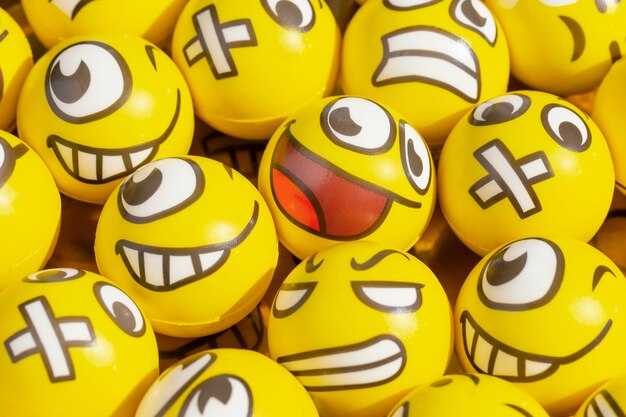
Begin with a cross-cultural emoji glossary and test messages with native speakers before publishing. Create a quick, repeatable workflow to verify what an emoji might convey across markets. This is where a symbol looks friendly on one platform, but may read as curt on another because of font differences and platform rendering. Run small tests in fairfield and across regional teams to catch misreads early. fuente
To prevent misreads, map platform-specific meanings and compare emoji meanings against real user feedback. In japonés contexts, windows and google on android rendering differ, and the same glyph may carry different tone. The grimace can signal irritation in one market and mild discomfort in another; the laughing emoji might signal sarcasm instead of amusement. thats a trap to avoid in corporate communication.
Dont rely on a single emoji to carry tone. Use concise captions that explain intent, and include an example that shows how the same emoji reads in two markets. font differences and platform effects matter: the same glyph can look fine on windows but strike a different chord on a mobile font. If youre handling international messaging, share the process with product and marketing, and build a guideline that asks teams to add text when clarity is at risk and to asked for feedback in the content calendar.
Finally, implement a fast feedback loop: collect responses from diverse users, ask what they interpreted, and update the glossary. Ask users where they seem unsure what the emoji conveys, and adjust the guidance accordingly. Maintain a shared font-agnostic reference you can link from emails and dashboards, so readers know what to expect across internet platforms, japonés audiences, and western markets. If a message seems off, swap the emoji for a neutral option and re-test with a small panel.
Practical Guidelines for Brands, Designers, and Researchers
Start with a cross-cultural emoji glossary and test it with real users in key markets.
Build a shared glossary that maps each emoji to regional interpretation and to recommended actions, so teams can decide quickly if an icon communicates the intended text and emotion.
- Audit and tag: create a software‑driven emoji dictionary with market labels and a short interpretation. Note if a symbol tends to be lost in translation; record the typical direction of misreadings. Include an example of usage and exact text paired with the emoji.
- Size and rendering: standardize emoji size across platforms and ensure the graphic does not distort smiley or text. Test with native fonts and measure how text plus emoji affects perceived warmth. Keep the heart at the center of the message.
- Context and captioning: accompany every emoji with a caption in the target language and an alternative for those who interpret differently. Those captions reduce misinterpretation and help connect with audience.
- Testing protocol: run A/B tests by region, published results, and compare interpretation across markets. Use a small study to measure lost meaning; include metrics like interpretation accuracy and sentiment score.
- Governance and updates: assign a team to update the glossary after new releases, like new mascots or characters (example: boehner, mascot, dolan) that appear in campaigns. Keep a changelog and publish updates for stakeholders.
- Practical design rules: prefer simple, universally recognizable symbols and offer alternative icons when a symbol reads differently. Use those guidelines in text and design files, and ensure the size and color choices preserve meaning across those contexts and others.
Identify emoji meanings that vary by culture to prevent misreads
Start with a cross-cultural emoji audit and align on a shared glossary. Map each emoji you use to the most likely interpretation in your target markets, then document what those same symbols mean locally. Use emojipedia as a baseline, then verify with language teams and university studies. Check how translation can shift tone across platforms, and note where google renderings differ from others. This helps you avoid surprise misreads in every channel–email, in-app messages, and carousels.
Three concrete steps to prevent misreads. First, catalog emoji by market and record the likely interpretation or misread risk in a living glossary. Second, test those meanings in carousels, email, and short-form product copy; measure clarity and time-to-interpretation to flag the riskiest items. Third, publish decisions in your brand designs and update the policy so teams turn ambiguity into neutral alternatives when needed.
Highlight the high-risk cases that vary by culture and provide practical replacements. For example, the thumbs-up can be seen as approval in many contexts but may offend some audiences; the OK sign can carry hostile connotations in other regions; the folded hands can imply prayer in some markets and a simple thanks in others. These nuances emerge quickly in these contexts, so prepare short brand notes that explain when to swap to a text emphasis instead of an emoji. Mention Dolan and other meme-driven icons as a reminder that memes travel with speed but carry unpredictable associations. If a symbol risks confusion, prefer descriptive text in email copy or a neutral pictogram in three or more markets. Keep size and visual weight consistent to avoid skewed interpretation in carousels and banners.
Data sources and benchmarks to guide decisions. Rely on emojipedia for standard meanings, then triangulate with regional studies from university programs and market research. Compare rendering differences across platforms–google and others–to identify where a symbol’s appearance may influence interpretation. Use example cases from recent campaigns to illustrate how the same emoji can read differently in these markets. This approach yields clarity on what to adjust before a global rollout, cutting the risk of misreads in real campaigns.
Practical guidelines for design and content teams. Keep a short, localized caption next to the emoji in email and app copy to anchor meaning, especially when the icon’s tone is sensitive. Build a standard text fallback in software that activates in environments where the glyph might be misinterpreted. Maintain consistent designs and emoji sizes to prevent cropping that could alter perception in carousels or lists. Store all decisions within this within your brand policy so future campaigns–whether in three months or next year–follow the same rules. Use the glossary in this process to ensure teams avoid off-brand picks across languages and markets.
Opportunities to improve collaboration and impact. A structured audit creates three opportunities: reduce misreads, raise message clarity, and accelerate localization work. By documenting which emoji mean different things, your team can tailor campaigns faster, align with product designs, and deploy more effective content at scale. This approach supports cross-functional partners–from university researchers to product teams and marketers–so these stakeholders gain a shared language for emoji usage, improving trust with audiences and boosting brand consistency across carousels, emails, and in-app software experiences.
Map regional sentiment shifts for commonly used symbols
Recomendación: Build a regional sentiment map for symbols using three data streams: surveys with consumers, posts on the internet, and panels led by a professor. This setup shows where a symbol is interpreted differently from its intended mark and where risk shows up in branding.
Define a standard symbol set for branding and designs–heart, check, and smile–then add regionally differentiated variants. Create a matrix that marks where consumers in different regions interpret a symbol in a way that is confusing for others, with notes on where the gap is widest, such as in japanese contexts.
According to the study, sentiment shifts cluster around three patterns: positive in some regions, neutral in others, and confusing when a symbol collides with local cues. Recently, the study reveals that the internet and offline experiences both shape interpretation, and differences appear where consumers face mixed signals from branding and designs. consumers report recently higher confusion levels around a single symbol.
Turn insights into action by a regional branding playbook: standardize three core symbols and provide regional variants only where data shows value. Use a clear usage map that tells where to deploy each symbol, along with color palettes and typography guidelines. Even small color or shape tweaks can alter interpretation, so keep versions tightly curated in most markets. This yields more accurate signals than generic surveys.
In practical terms, assign a project lead–preferably a professor of design or marketing–to coordinate measurement, with tech support from a data team. They should track changes every quarter and update the map accordingly. Risks include misinterpretation in new markets and fatigue from too many variants; address by pruning to a core set of symbols and adding context where needed.
Implementation details: build a lightweight dashboard that shows symbol sentiment by region, symbol, and time. Use color-coded heatmaps and simple legends to help non-experts read the map. Provide short guidelines for designers, with examples of how the three symbols should be used in different contexts. The maps should be updated as new signals appear; avoid overcomplication that increases confusion.
Metrics to watch: share of clarified interpretations, rate of confusion reductions, and consistency with standard branding across products. Track with weekly checks and quarterly reviews. With careful updates, brands turn regional data into safer experiences that resonate with consumers while minimizing risk.
Assess how emoji usage affects consumer understanding and trust
Implement platform-specific emoji guidelines and test them with real users before scaling campaigns.
In a study with hundreds of participants across apple and apples ecosystems, iphone, androids, and windows devices, aligning emoji with platform semantics boosted comprehension by about 18–26% depending on context. These results seem robust across text, app notifications, and web banners. Some companys rely on a single glyph, which can seem to send mixed signals if the consumer base uses different devices.
When emoji differ by device, some phrases read as friendly on one screen and distant on another, which can erode trust. For instance, the smiling emoji may look warm on iphone, while a grimace on androids signals frustration in the same text. These gaps spike on customer-service threads and marketing text where tone matters.
lancker notes that meaning shifts with device and locale, a view echoed in the fairfield journal. These insights guide teams after product launch to run cross-device checks and confirm the icons map to intent on google, apple, iphone, androids, and windows.
To close the gap, pair emoji with concise text that describes intent, use a single mascot emoji as a recognizable cue, and maintain a consistent glyph set across seasons. Some teams keep a master list of which emoji icons map to which feelings, because these mappings dont map cleanly across all markets. Tech teams that run these tests can quantify impact on trust and clarity. These steps help when you reach customers through the internet, text, or app communication, and they translate into clearer understanding for some audiences.
| Platform | Guidance | Impact on understanding and trust |
|---|---|---|
| apple / iphone | Use native glyphs; ensure color parity; avoid custom icons; include smiling faces | High clarity; reduces misreadings |
| Use Google's emoji set; align with standard expressions; test for grimace misreads | Consistency lowers friction in multi-device threads | |
| androids | Match Android glyphs; account for tone in grimace vs smiling | Reduces cross-device confusion |
| windows | Account for glyph rendering; provide text fallback | Minimizes display gaps |
| brand mascot | Use one recognizable emoji; pair with text | Boosts recognition; requires guardrails |
Develop clear brand messaging: when to avoid or pair emojis with text
Pair emojis with concise supporting text in most brands; if the message is formal or high-stakes, drop the emoji and rely on text alone. This approach keeps the point clear and the communication precise.
When to pair: after a short statement that signals sentiment, such as a product launch, a thank-you, or a celebration. Use a single symbol and place it at the end to keep the message crisp; multiple symbols increase confusing risk and make the text harder to scan for those reading on mobile.
When to avoid: in high-stakes contexts such as legal disclosures, regulatory notices, or cross-cultural campaigns where meanings diverge. In these cases, rely on text only to preserve accuracy and trust.
Design and governance: build a consistent emoji palette within your designs. Those guidelines apply to personal branding and company communication alike. A clear set of rules makes them less likely to distract from the core message and helps brands stay coherent across channels.
Measurement and testing: run A/B tests across platforms; measure comprehension with short surveys; use insights to adjust the emoji mix. Recently, data shows emojis reinforce text more reliably when paired with explicit labels rather than used as a substitute. charles davis notes this pattern, and rajasree’s team designed more conservative palettes for professional audiences to reduce misinterpretation by those with different norms.
Examples and tips: use laughing to signal lighthearted moments, but avoid faces that may be misread in different cultures. If you’re unsure, test with a sample of those audiences and review the resulting metrics to gauge clarity and engagement.
Actionable steps: define when emojis will be used, assemble a small emoji palette, write text-first versions of every post, run a two-week test, and seal the policy for all teams to follow. This approach keeps brands consistent and helps teams communicate more effectively with customers instead of creating confusion.
Источником понимания служит наблюдение, что в разных странах символы могут означать разные вещи; поэтому сочетайте emoji с текстом и проверяйте восприятие аудитории. Этот источник подчеркивает важность ясности в брендинге и коммуникациях, особенно для компаний с глобальной аудиторией, где misinterpretations могут снизить доверие и усилие по брендингу.
Prueba las opciones de emojis con usuarios reales antes de lanzamientos de productos o campañas
Realice pruebas con usuarios reales de opciones de emojis antes de lanzamientos de productos o campañas. Cree un panel de al menos 120 consumidores de diversas regiones, además de participantes universitarios y personal de organizaciones sin fines de lucro, y presente el mismo mensaje con 3 a 5 variantes de emojis, incluidas opciones sonrientes y de sonrisa. Mida la claridad y el tono percibido para detectar malas interpretaciones antes de una implementación más amplia y realice un seguimiento de las señales más consistentes en todos los grupos.
Utilice el correo electrónico para reclutar probadores y proporcione un cuestionario corto y estandarizado. Se pidió a los probadores que nombraran el significado de cada emoji en contexto, que calificaran la adecuación con este texto acompañante en una escala de 5 puntos y que indicaran lo que interpretarían en esa situación. También capture qué destacó y qué causó confusión.
Compare los resultados en diferentes plataformas presentando emojis dentro de los teclados nativos de Google y Apple, y anota dónde divergen las interpretaciones. Según los hallazgos, algunas diferencias persisten incluso cuando el texto se mantiene igual, lo que revela las señales más fiables y las oportunidades para ajustar la dirección o estandarizar las opciones de emojis en los diferentes canales. Rajasree, de un colaborador universitario, documentó casos en los que el emoji sonriente parecía amigable en un mercado, pero perdió calidez en otro.
Transformar los hallazgos en un estándar práctico: elegir el emoji con la puntuación de claridad más alta, confirmar con una prueba rápida en una segunda ronda y luego aplicarlo a campañas y mensajes de productos. Discutir las decisiones con los equipos de la compañía y actualizar la guía de estilo en consecuencia.
Mantener una fuente accesible al vincular el plan de pruebas y los resultados anonimizados a una única fuente de verdad. El proceso crea oportunidades para obtener información valiosa sobre los consumidores y reduce el riesgo de pérdida de significado, lo que ayuda a que los mensajes de correo electrónico, las publicaciones en redes sociales y el texto dentro de la aplicación se mantengan alineados con las expectativas de los consumidores.


