
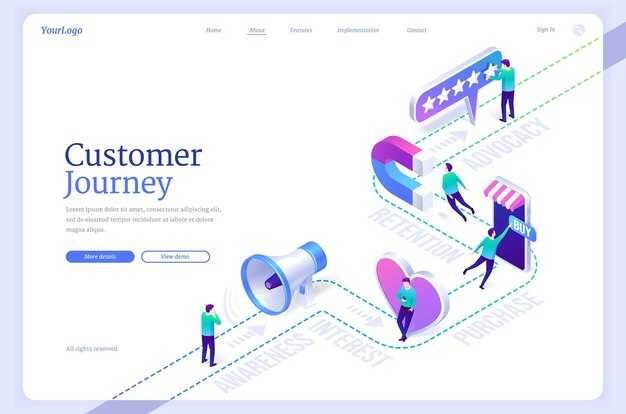
Map core moments and track a single retention metric to guide every action. Build a full picture by collecting data across product, marketing, and support to surface friction at each touchpoint. This foundational view lets teams anticipate needs and act before disengagement grows.
Use a foundational model to estimate likelihood of continued use and to guide interventions. Plug in onboarding completion, feature adoption milestones, and response time to support queries; the output provides a path for maintenance and resource allocation.
Create maps of interactions and identify moments that deserve a rapid response. A powerful playbook lets you be ready to act within 24–72 hours after a trigger, reducing churn risk and boosting client satisfaction.
Involve teams with meeting rhythms: product, marketing, and customer support share a single view of impact. A focused approach keeps effort on what moves retention beyond vanity metrics. Track results weekly and adjust campaigns in real time to close gaps.
Sfrutta integrations with CRM, analytics, and in-app messaging to close data gaps. A foundational data loop helps you understand customer behavior at moments of decision, enabling timely nudges that drive value realization.
Keep the cadence simple and actionable: run A/B tests of proactive check-ins within 48 hours of a milestone for a randomized cohort; measure retention over 90 days. Expect a 5–15% lift when messages are personalized and signal the next best step. Use maps to scale the approach across segments and channels.
Rather than broad slogans, commit to a ready plan with concrete milestones: onboarding completion, feature activation, and first-value moment. A maintenance schedule ensures ongoing improvement; review data weekly and iterate on the playbook.
Purchase Stage: Turn interest into ongoing relationships through targeted touchpoints
Launch a 90-day post-sale touchpoint plan centered on personalization to convert initial interest into ongoing relationships. Segment buyers by goals and map three waves: onboarding, usage optimization, and loyalty offers. Each wave uses concise templates, clear click-through paths, timely promotions, and a direct request for feedback. In addition, integrate a mechanism for gathering feedback.
At every touchpoint, reach through the channel your buyer prefers and ask 2-3 questions to gather deeper understanding of use cases, success criteria, and decision-making drivers. directly connect content to their goals and show how progress compounds over time, not just a single sale adds revenue.
Analyze engagement data daily: click-through rates, content consumption, and post-sale actions. Use those insights to optimize subject lines, copy length, and offer relevance. Keep a simple KPI set: engagement rate, response rate, conversion of the next step, and average time to next action.
Invest in confidence-building tactics: transparent expectations, clear next steps, and reliable follow-through. Align promotions with value adds and ensure your reputation remains top of mind by documenting outcomes and sharing success stories from real customers.
Operationally, implement a governance rhythm: define concrete goals, map driver metrics, and assign owners. Use a lightweight framework to track progress, iterate quickly, and keep every touchpoint aligned with the customer’s evolving needs. Leverage a platform like salesloft to automate sequences while preserving a human, helpful tone.
Identify Key Post-Purchase Moments in the Checkout Path
Implement a five-point plan immediately after checkout: confirm, inform, support, secure, and re-engage. Each moment lives on a dedicated page or within the account area, with messaging that feels thoughtful, timely, and human.
- Immediate confirmation and receipts
- Provide a mobile-friendly confirmation page with order number, estimated time, and clear fees or discounts.
- Offer a one-click link to the account page to view status.
- Use fingertips-friendly actions: big buttons, concise copy, no clutter.
- Ask for a brief qualitative cue on how the experience felt to inform future improvements.
- Delivery visibility that reduces anxiety
- Send dynamic updates at key milestones (packed, shipped, out for delivery, delivered) via email or SMS, and in the account page.
- Provide an estimated delivery window and a backup plan if delays occur.
- Influence trust by including a link to support and offering assistance if issues arise.
- Clear returns, refunds, and flexible options
- Explain the return window before purchase completion and again on the confirmation page; highlight any fees up front.
- Offer an effortless returns path from the account page and order details; include a QR code for in-store returns if relevant.
- Provide a quick, qualitative feedback channel to understand what could be improved.
- Post-purchase assistance that builds habits
- Invite customers to enable order updates via their preferred channel in the account settings; provide timely help when needed.
- Offer relevant features or add-ons they can explore from the confirmation page, based on past purchases to influence future choices without feeling pushy.
- Track time-to-answer and aim for a response within 15 minutes during business hours; ensure a dedicated assistance option is always visible.
- Thoughtful re-engagement and trust-building
- Invite customers to leave feedback and share their experience; reward with a small incentive that doesn't feel heavy–an offering that becomes genuine through organic, low-pressure messaging.
- Suggest next-step ideas tailored to their accounts, such as setup tips, care guides, or loyalty offers; place these in the right place in the account page.
- Rather than pushy prompts, provide timely, contextual messaging and adjust timing and cadence based on qualitative signals and performance time metrics.
Craft a Post-Purchase Welcome Series for First-Time Buyers
Launch a four-part welcome series within 24–72 hours after checkout. Keep a consistent, friendly tone across messages and present a clear action in every email. Each message links to tutorials and a quick onboarding step that reduces friction. This approach helps eliminate friction and creates a positive start that empowers buyers to explore confidently.
Identifying preferences from checkout data enables customizable recommendations and a feel that matches each buyer. Tutorials are included to help discover best usage, care, and setup. The sequence includes clear points of contact to guide the buyer, creating confidence and a path to convert. Adapting content to engagement signals lets you convert at a higher rate. Aligning messaging across checkout, support, and marketing departments supports alignment across teams and prevents a disconnected experience. Avoid leaving outcomes to luck; rely on data for accuracy and predictable results.
The table below summarizes timing, objectives, tactics, and metrics to track progress:
| Stage | Timing | Objective | Key Tactics | Metrics |
|---|---|---|---|---|
| Post-purchase Email 1 | Day 0–1 (Checkout) | Confirm purchase, set expectations | Order details, welcome message, tutorials, customizable recommendations | Open rate, click-through, tutorial views |
| Post-purchase Email 2 | Day 2–3 | Discover usage tips | Personalized tips, how-to content, care guides | Click-to-tutorial rate, time-to-first-use |
| Post-purchase Email 3 | Day 7 | Eliminate friction and reassure | Returns policy, shipping updates, support options | Return rate, support engagement |
| Post-purchase Email 4 | Day 14 | Encourage loyalty and cross-sell | Personalized offers, loyalty points explanation, next-best action | Upsell rate, repeat purchases |
Segment Buyers by Purchase Behavior for Targeted Follow-Ups
Automate segmentation by purchase behavior within 24 hours of checkout to create three cohorts: high-value repeat buyers, mid-value repeat buyers, and one-time purchasers. Build a real engine that uses recency, frequency, and monetary value to assign customers to a segment for follow-ups, using real-time data. This approach boosts engagement and lifts revenue by delivering the right message to the right people. That creates a high lift in engagement.
Use vendastas to connect your e-commerce data and capture purchase signals, enriching profiles with product-category flags and price tiers. The engine uses order value, time since last purchase, and category interest to surface high-potential customers for targeted messages. Track your rates and adjust offers to outperform competitors.
Tips to keep data clean and messaging precise: maintain a single customer ID to avoid disconnected data silos, track every interaction, and ensure messages align with positive interest signals. Automate alerts when a segment shows rising interest, boosting response rates. Use premium content for top segments, while providing lighter nudges to others. This thoughtful approach supports maintaining relevance and increases engagement.
High-value buyers receive a personalized offer after second purchase, plus recommendations across related categories. If a customer left the cart, trigger a reminder within 24 hours. For mid-value buyers, send a tailored content bundle and a limited-time discount. For one-time purchasers, share a practical guide and a soft nudge to re-engage.
Measure success with open rates, click-through rates, and conversion rates. Target ranges: high-value segment open rates 25-40%, CTR 4-9%, conversions 3-7%; mid-value segment open 18-28%, CTR 2-6%, conversions 1-4%; one-time segment open 10-20%, CTR 1-3%, conversions 0.5-2%. Use A/B tests to refine subject lines, send times, and offer types. Track progress in dashboards and weekly summaries to show impact on retention and revenue.
Implementation steps: Step 1 define three segments by purchase behavior and align triggers to channels (email, push, SMS). Step 2 set up events and thresholds in your automation engine, ensuring data streams stay real-time. Step 3 run a two-week test, monitor engagement, and adjust messaging. Step 4 roll out refinement widely, and keep vendastas capabilities in sync with your CRM and e-commerce platform.
Data governance: maintain data quality, connect data across touchpoints, avoid disconnected silos, and respect privacy and consent. Schedule quarterly reviews of segment definitions and refresh product-category flags. Provide clear guidance to teams and maintain logs for audits. Leverage the platform's capabilities to automate reconciliation and generate actionable insights.
By focusing on purchase behavior, you gain precise follow-ups, reduce churn, and boost retention. The approach yields real, measurable impact on revenue through higher engagement and loyalty. Use the guidance and capabilities from your tech stack to sustain these gains and keep your engine strong for future campaigns.
Set Timely Triggers for Reorders and Relevant Upsells
Set three driver triggers: 7 days for reorders, 14 days for relevant upsells, and 28 days for replenishment nudges after purchase. These triggers are designed to be easy to adjust, using historical purchase data and product design specifics to fit each category. For expensive items, extend windows to 21–35 days and tailor offers to maintain value. Collect feedback from the customer base and test different offers across channels, including public channels like email, in-app messages, and SMS.
Design the prompts with the customer in mind, delivering a specific benefit in a single, actionable message. This approach serves the customer by delivering timely, relevant offers. Collect feedback via quick surveys after interactions and monitor performance along open rates and conversions. Cross-department teams map segments to offers, ensuring the right upsell is paired with the right reorder.
Using built-in automation, set up a mapping table that links product families to trigger windows and recommended cross-sells. The design should evolve with incoming data, allowing you to refine drivers, windows, and creative every quarter.
Measure with concrete targets: uplift in reorder rate by 6–12%, increase in average order value from upsells by 8–15%, and a reduction in churn for key segments. Track three retail scenarios to validate results, and adjust thresholds after each quarter.
Finalize a three-month pilot with clear ownership: marketing, product, and operations collaborate in a cross-department rhythm, with a published public dashboard and weekly reviews. Build a feedback loop to collect new data and evolve the triggers based on real results.
Collect Feedback After Delivery and Turn It Into Next-Purchase Signals
Trigger a unified, automated post-delivery feedback loop: after checkout, send a 3-question survey via email or SMS within 24 hours, and offer a quick calls option to capture deeper insights. This approach keeps data fresh and accelerates action. Schedule follow-ups to align with fulfillment timing and avoid overwhelming customers.
Ask three focused questions: 1) Rate your overall experience (1-5). 2) Which part stood out as positive, or what slowed you down? 3) Would you like a tailored tip, promotion, or product demo? Include an optional free-text field for specifics. In practice, set response capture to feed directly into the existing CRM for real-time scoring and action.
Turn responses into clear signals: classify feedback as positive, neutral, or negative; tag respondents as promoter, existing customer, or others; map signals to next-purchase actions. For promoters, trigger timely campaigns that cross-sell or upsell; for neutrals, offer education or a light incentive; for detractors, route to calls or a quick remediation path. Track response times and results to prove impact and minimizes friction in the process.
Link signals to campaigns and checkout-ready offers by segment. Use flexible routing so promoter responses get proactive engagement, while others get awareness nudges. Prioritizing bottlenecks identified in negative feedback helps focus fixes; adapt messaging and offers to learn which prompts drive the strongest response. Scheduling should balance speed with relevance.
Operationally, consolidate data in existing systems with a unified view of customer history. Automate routing to calls or messages, and schedule follow-ups instead of sending everything at once. Run testing to compare channel performance (email vs. SMS) and wording; results guide optimization of campaigns and features across touchpoints. Learn from the data to grow efficiency and improve response rates.
Measure success with concrete metrics: response rate, share of feedback turning into next-purchase signals, churn reduction, and lift in repeat purchases. In a 6–12 week pilot, anticipate a 5–15% increase in subsequent buys among promoters and a measurable decrease in churn for at-risk customers. Use a quick demo to socialize templates and show how the feedback loop scales across campaigns and channels.


