
Translate your top 5 product pages for international markets to test MT quality and establish a baseline you can act on within days. This approach works across платформы such as your website, app store listings, and advertisements, and it helps you measure engagement differences between original and translated content. Since you found gaps, tighten glossaries and reuse translations to boost consistency.
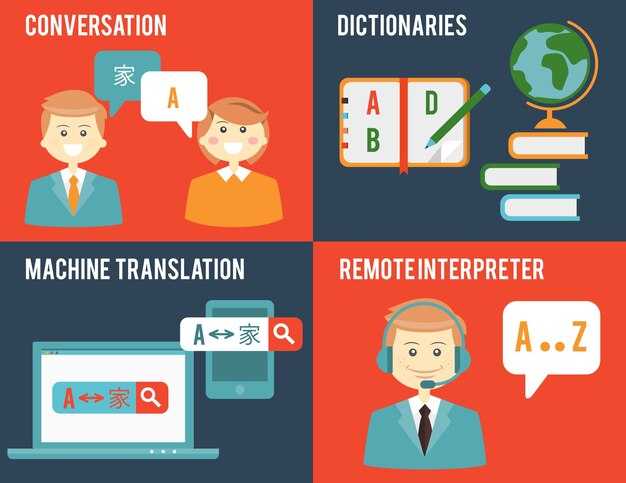
Machine translation relies on technologies that translate text from one language to another using statistical, neural, and hybrid approaches. It allows rapid coverage of international audiences and improves доступность by turning product descriptions, reviews, and support content into multiple languages. When you evaluate MT, compare automated output with human checks to build on a common baseline and avoid misinterpretations.
Benefit 1: Faster time-to-market for campaigns and product updates, often than manual translation because MT can process large volumes in hours rather than days. Your team might want to run a quick QA pass with bilingual reviewers to catch edge cases.
Benefit 2: Consistent messaging across markets on world scale платформы, reducing the risk of mismatched tone in advertisements and site content. A centralized glossary found in your CAT tool keeps terminology aligned for target languages and improves reviews from local partners.
Benefit 3: Lower entry costs for market testing. You can deploy MT translations for a subset of pages or ads to test target markets before committing human localization budgets. This approach helps you measure engagement and refine content accordingly.
Pair MT with human reviews to catch nuances. Since quality matters, run back-translation checks and maintain a bilingual advertisements style guide. Track accessibility improvements (screen readers, alt text) and report findings to stakeholders.
Monitor metrics such as click-through rate, time on page, and translation consistency; update MT models continuously as user reviews accumulate so you can adapt to new markets. If you found gaps earlier, refine glossaries and training data to lift quality.
Practical Perspectives on Machine Translation for Market Entry and Data Analysis
Begin with a lightweight plugin-driven MT layer to translate core product pages and support content, then layer human review for accuracy and tone. This approach keeps costs predictable and lets you meet multilingual audiences quickly. This method balances speed and quality, delivering better results at scale.
These steps acknowledge limitations of machine-generated output, especially for product names, marketing claims, and legal terms. A centralized glossary and style guide help staff validate translations and align terminology across languages, improving grammar and consistency. Use back-translation and native checks to surface issues in nuance, phrasing, and sentence structure.
- Integrate a multilingual plugin in your CMS to automate initial drafts while preserving content structure.
- Establish a staff-led post-editing workflow to correct tone, fix grammar, and ensure the output feels professional for each audience.
- Maintain a centralized glossary and brand terms tied to products so translations stay consistent across pages and campaigns.
- Define native-language review standards and SLAs, then ensure editors meet targets for accuracy and readability.
- Annotate content with metadata for localization: short sentences, clear structure, and culturally appropriate visuals.
- Leverage deep MT models for batch translations, but automate fallback to human review for high-stakes content such as legal or claims.
- Use data analytics to translate multilingual feedback and extract insights on audiences’ needs, then grow improvement loops into product decisions.
For data analysis, MT broadens reach by converting user feedback and reviews into analyzable text. Pair machine-generated translations with back-translation checks to preserve meaning, and apply sentiment and topic analysis to identify what these audiences care about. Ensure data pipelines preserve native nuances and map insights to product teams for prioritization.
- Quality metrics: accuracy, grammar, and sentence fluency across languages, tracked per language and content type.
- Operational metrics: post-edit time, editor utilization, and cost per translated word to monitor ROI.
- Data quality metrics: alignment with source meaning and coverage of key terms in the glossary.
By combining these approaches, your market-entry communications become reliable across languages, and data-driven decisions help products grow and support globalization.
How MT fits into real-world localization workflows
Begin with a focused MT pilot on one product line for two markets to prove impact. Run MT for one language pair over 4–6 weeks and measure post-editing time per 1,000 words, edit rate, and cost per word. Expect a 30–50% reduction in overall turnaround time and a clear speed advantage when compared to manual translation.
Make MT the first pass in the localization workflow, then route output to specialized post-editors. This approach preserves brand voice, reduces time-to-market, and creates a reliable baseline for quality checks. Use shorter turnarounds to free editors for higher‑value tasks and maintain consistency across channels.
Load a branded glossary, termbase, and style guides, then incorporate them into the MT engine to improve consistency. Regularly update the dictionaries and run monthly refinements so that brand terms and terminology stay aligned with evolving messaging.
Connect MT with current TMS and CAT tools to reuse translations from memory and automate file routing. This integration speeds up repetitive work, reduces human effort on routine content, and ensures outputs align with your established workflow standards.
Define required quality metrics, establish SLAs, and create a clear post-editing workflow. Content with legal or regulatory risk cannot rely solely on MT, so set thresholds for accuracy and provide a rapid escalation path for flagged items.
Weigh cons and benefits openly: MT lowers per‑word costs and accelerates bulk translations, but may introduce glossing or tone issues. Mitigate by maintaining glossaries, enforcing post‑editing, and scheduling periodic quality audits to catch drift early.
Promote inclusivity by covering multi-dialect markets, while monitoring slang and local nuance. MT cannot fully replace human judgment for culturally sensitive content, so plan for targeted human review in regions with strong local norms.
Rely on artificial neural networks and other technologies, but tailor models to your domains. Especially useful for recurring content like product updates, help centers, and marketing banners, where current data improves relevance and reduces misinterpretations.
For teams operating in the microsoft ecosystem, use a base translation API as a starting point, then customize with domain data to fit your brand and current guidelines. This keeps throughput high while preserving safety and brand integrity across platforms.
Frame a small, ongoing team of specialized translators and editors who act as weavers of language, stitching MT output with human expertise. Their role is required to ensure nuance, tone, and regional sensitivity remain aligned with your brand standards.
Choosing MT approaches for market-entry scenarios: NMT versus SMT
Recommendation: Use a hybrid MT workflow, with NMT translating advertisements, product descriptions, and user-generated content automatically, while rule-based SMT handles terminology and legal notices to protect identity and consistency.
Defining the project scope and language pairs helps you plan data collection and labeling, and helps you reduce back-and-forth tasks. For many markets, NMT can render content like product descriptions and advertisements quickly, behind the brand identity you want to maintain, but you cannot rely on it for legal notices; instead, combine output with a rule-based SMT layer and glossaries curated by linguists to safeguard identity and consistency. This approach addresses the inability of solely automated systems to honor brand voice, like tone and regulatory wording, and sets the stage for replacing routine translator work over time.
Behind each market-entry project, set up a concrete evaluation plan that compares NMT and SMT outputs on ads, descriptions, help content, and other material. Use pairs of texts and a ground truth to measure accuracy, consistency, and feel. Track KPIs such as time-to-publish and error rate, and aim to reduce revision cycles significantly. Automate QA checks where possible, but keep a translator in the loop for legal statements and terms to protect brand identity and regulatory compliance. This approach helps you feel confident about the balance between speed and quality, while a gradual shift toward replacing manual steps keeps the project moving forward and preserves consistency across languages.
Measuring MT quality for product interfaces and customer support
Set a clear target from the start: aim for 92–95% task success on core UI flows and 85–90% accuracy in support responses after MTPE, using a mix of automated checks and human reviews to validate translate quality in context-aware scenarios. This approach began with a focused test set and scales through MTPE-enabled workflows to unlock faster releases.
- Define targets and a source of truth
- Build task-based evaluation sets
- Combine automated checks with human judgments
- Measure user-focused outcomes
- Assess types of quality issues
- Develop a practical workflow
- Implement governance and continuous improvement
- Address myths and plan for the future
- Practical recommendations to start now
Document tolerances for both interfaces and support content, linking them to user tasks and brand voice. Create a centralized источник of terminology and style rules to ensure consistency across localized strings, knowledge-base articles, and chat templates. Include a glossary that covers where terms like “checkout,” “account,” and policy language must align with the original source content. Set milestones on the timeline to track progress from pilot to wider rollout.
For product interfaces, assemble UI strings, pluggable placeholders, numbers, dates, and plural forms that cover 80–120 key pathways. For support, curate representative chat transcripts, emails, and knowledge-base pieces in target languages. Include tester profiles such as yehoshua to simulate real feedback and capture how context affects comprehension. Use these datasets to measure adequacy, fidelity to the source, and localized nuance.
Run automated checks for terminology consistency, length constraints, placeholders, and format preservation. Pair with human reviews focused on context-aware accuracy and user intent preservation. Track rework rates to quantify how MTPE reduces follow-up edits, and monitor how often post-edits unlock better user outcomes rather than simply passing a pass/fail gate.
Capture task completion time, error rates in UI actions, and customer satisfaction scores after interactions in localized channels. Use these signals to adjust MT settings, glossary scope, and MTPE intensity. Report reach and access improvements by measuring how many users see usable translations within their workflow, and how quickly content becomes available in new locales.
Classification helps prioritize fixes: terminology mismatches, tone drift, policy violations, or missing contextual cues. Tag issues by context to guide engineers and content teams. Track myths about MT by verifying claims with data from the tests and real user feedback, then address gaps with targeted enhancements.
Design a workflow where product content is translated, checks are run, and edits feed back into the cycle. Use MTPE where speed matters most, and escalate to human review for high-risk strings. Build a reproduceable pipeline so teams can produce consistent results across products and support channels.
Establish ownership for the MT pipeline, glossary, and style guides. Schedule regular reviews to refresh terminology and adapt to product changes. Maintain a timeline for quarterly audits and yearly refreshes to keep translations aligned with evolving features and policies.
Confront myths that MT alone suffices for all scenarios. Emphasize that context-aware checks and MTPE blend speed with reliability. Prepare for scalable future enhancements by combining technologies with human judgment, enabling broader access to localized interfaces and support. The project should start with a focused scope and expand as confidence grows, reaching more languages and channels.
Begin with a 6-week pilot focusing on two critical flows: a product interface path and a customer-support conversation. Use MTPE to reduce rework and speed delivery, while tracking task success, support accuracy, and user feedback. Create a simple dashboard showing timeline of improvements, key metrics, and a list of prioritized fixes. Keep the process lightweight yet structured to sustain momentum as you broaden coverage to additional types of content and locales, producing measurable gains in access, reach, and user satisfaction.
Leveraging MT to unlock multilingual data insights for analytics
Adopt a hybrid MT workflow to reveal multilingual data insights quickly: use machine-generated translations as the first pass, then have bilingual reviewers validate critical findings to enhance accuracy and engagement.
Translate content along the data pipeline into the target language, then feed the output into analytics products and dashboards. Domain-tuned MT models can yield improvement of 20–40% in consistency and recall for sentiment and topic tagging, delivering these improvements that increase productivity and enable faster decisions.
Invest in training with your own document sets to reduce the disadvantages of generic MT. Training on product names, customer terms, and local regulatory language aligns MT output with your brand voice and improves document-level coherence. This approach strengthens engagement across markets and supports long-term data strategy.
These gains come with cons: MT can misinterpret tone or domain-specific nuance, and some languages still show limited coverage, which can make difficult post-editorial steps. To mitigate, implement a lightweight post-editing layer and maintain a glossary to ensure consistent terminology.
Place MT at the start of the analytics process as preprocessing, so analytics operate on translated text while you retain the original for audit and documentation provenance. This setup connects workflows that existed in silos and ensures you can reference sources along the data trail and measure improvement over time.
Track speed gains in data preparation, the accuracy of key metrics, and engagement of stakeholders. In practice, teams report 2x faster data labeling, 1.5x faster report generation, and smoother collaboration across multilingual teams. Schedule quarterly recalibration of training data to maintain performance and document improvements.
For analytics teams, deploy a simple MT layer first, pair it with rapid post-editing, and extend to additional languages as terminology and training data expand. This approach helps products and analytics platforms operate well across markets, delivering more contextual insights from multilingual data.
Privacy, security, and governance considerations when using MT services
Use on-device or private-cloud MT for files containing personal or confidential data. This minimizes exposure risk and keeps processing within your trusted environment.
Classify input by risk, redact identifiers before translation, and limit processing to items that require automation. Do not transmit files that include full personal records or identifiers to external services.
Limit access to MT tasks by role, create short-lived API keys, and apply IP allowlists. Maintain logs of actions for auditing without exposing content to outsiders.
Before processing, replace personal names with tokens; translate; then restore names in the resulting text using an auditable mapping stored securely.
Set retention rules: delete raw inputs after processing, keep only high-level metadata, and purge caches after a defined period. Maintain tamper-evident logs to verify events.
Define governance roles, data-handling policies, and escalation steps for incidents. Publish a brief data-flow map for stakeholders and regulators.
Periodic risk reviews help identify changes in tools or providers. Include vendor risk assessments and ensure service-level agreements cover data handling, deletion, and incident response.
| Area | Практика | Notes |
|---|---|---|
| Data handling | Process only within controlled environments; redact identifiers before translation. | Keep a mapping in secure storage; separate from content. |
| Контроль доступа | Use role-based access; credentials rotated regularly; restrict API keys | Limit who can initiate translations. |
| Retention & deletion | Define retention periods; delete raw inputs and caches after cutoff | Provide verifiable deletion proofs. |
| Аудит | Enable tamper-evident logs; retain for compliance reviews | Regularly audit logs and access events. |
| Human review | Apply checks for outputs with risk implications; escalate when needed | Integrate with case-management tools. |


